Download Faith, Hope and Poetry (Routledge Studies in Theology, Imagination and the Arts)
Checking out publication Faith, Hope And Poetry (Routledge Studies In Theology, Imagination And The Arts), nowadays, will certainly not compel you to constantly purchase in the store off-line. There is an excellent location to get guide Faith, Hope And Poetry (Routledge Studies In Theology, Imagination And The Arts) by online. This web site is the best site with great deals varieties of book collections. As this Faith, Hope And Poetry (Routledge Studies In Theology, Imagination And The Arts) will be in this book, all publications that you need will correct here, too. Merely look for the name or title of the book Faith, Hope And Poetry (Routledge Studies In Theology, Imagination And The Arts) You could discover just what you are searching for.
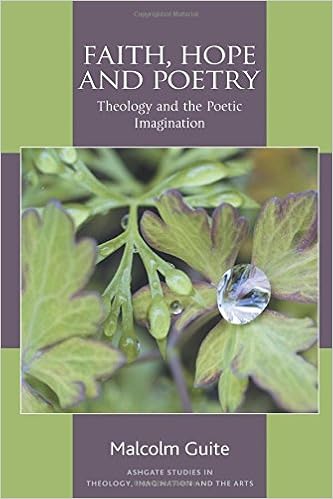
Faith, Hope and Poetry (Routledge Studies in Theology, Imagination and the Arts)

Download Faith, Hope and Poetry (Routledge Studies in Theology, Imagination and the Arts)
Required a help to locate the brand-new released book? Don't bother! Don't think so hard because we are constantly in to assist you. Whoever you are, to discover guide, from lots of countries, is now very easy. Below, we have the lots collections of numerous kinds and categories of the books. The books are noted in soft documents systems and you could discover the link for each and every book to download and install.
Checking out practice will certainly constantly lead individuals not to satisfied reading Faith, Hope And Poetry (Routledge Studies In Theology, Imagination And The Arts), an e-book, ten e-book, hundreds books, and more. One that will make them feel satisfied is completing reading this e-book Faith, Hope And Poetry (Routledge Studies In Theology, Imagination And The Arts) and obtaining the notification of guides, after that discovering the various other following e-book to review. It continues even more and a lot more. The time to complete checking out a book Faith, Hope And Poetry (Routledge Studies In Theology, Imagination And The Arts) will be always numerous depending upon spar time to spend; one example is this Faith, Hope And Poetry (Routledge Studies In Theology, Imagination And The Arts)
The factors that make you need to review it is the related subject to the condition that you truly want now. When it's going to make better chance of analysis materials, it can be the way you should take in similarly. Yeah, the ways that you can appreciate the time by checking out Faith, Hope And Poetry (Routledge Studies In Theology, Imagination And The Arts), the moment that you could utilize to do great task, as well as the time for you to get just what this publication offers to you.
About this book, you might not have to be fretted to obtain it as checking out material. This book shows how you could begin to like reading. This book will certainly reveal you just how modernity will complete the life. It will also show that enjoyable publication will certainly be additionally factual publication that depend on exactly how the writer informs and utter the meaning to the readers. Based upon this case, currently you should pick Faith, Hope And Poetry (Routledge Studies In Theology, Imagination And The Arts) as one of your collections to review. Once again, that's for your reading material.
Faith, Hope and Poetry explores the poetic imagination as a way of knowing; a way of seeing reality more clearly. Presenting a series of critical appreciations of English poetry from Anglo-Saxon times to the present day, Malcolm Guite applies the insights of poetry to contemporary issues and the contribution poetry can make to our religious knowing and the way we 'do theology'. This book is not solely concerned with overtly religious poetry, but attends to the paradoxical ways in which the poetry of doubt and despair also enriches theology. Developing an original analysis and application of the poetic vision of Coleridge, Larkin and Seamus Heaney in the final chapters, Guite builds towards a substantial theology of imagination and provides unique insights into truth that complement and enrich more strictly rational ways of knowing. Readers of this book will return to their reading of poetry equipped with new insights and enthusiasm and will be challenged to integrate imaginative ways of knowing into their other academic and intellectual pursuits.
Your recently viewed items and featured recommendations
›
View or edit your browsing history
After viewing product detail pages, look here to find an easy way to navigate back to pages you are interested in.
Product details
Series: Routledge Studies in Theology, Imagination and the Arts
Paperback: 272 pages
Publisher: Routledge; 1 edition (March 24, 2017)
Language: English
ISBN-10: 140944936X
ISBN-13: 978-1409449362
Product Dimensions:
6.1 x 0.6 x 9.2 inches
Shipping Weight: 1.2 pounds (View shipping rates and policies)
Average Customer Review:
4.5 out of 5 stars
6 customer reviews
Amazon Best Sellers Rank:
#417,871 in Books (See Top 100 in Books)
On the positive side, this book is a superb presentation of Romantic philosophy and its elusive corollary the "creative imagination" especially as propounded by Samuel Coleridge. On the negative side, the author does not engage the fundamental deficiencies of Romantic philosophy that led to its demise two centuries ago. Romanticism could not deliver on its promise of a spiritual realm beyond the material universe we observe. The Romantics, like the Modernists before them, came to despair of objective truth and ultimate meaning in life. The scientists' response was to diminish man to a collection of atoms while the Romantics sought to ennoble and even deify him.Where Modernism made the scientist's reason the ultimate arbiter of Truth, Romanticism vested that function in the poet's imagination. For the poet, the phenomena of the natural world form a symbolic language that, when properly interpreted by the creative imagination, reveals hidden truths about man's inner nature and the mind of God itself. (107.) The poetic imagination is "truth-bearing" and gives us "our only possible apprehension of the Kingdom of God." (13-14.)The poet's access to the spiritual realm is through the imagination. The poet observes the natural world and, with the power of creative imagination, transforms an image from nature into a metaphor for an unseen spirit realm. In Romanticism, there is no objective spiritual reality that can be directly perceived or experienced. All we can do is hope that there is a spiritual reality based upon the poet’s ability to create metaphors about it. That is Romanticism's "wager on transcendence."But the author lets the cat out of the bag when he states that the wager on transcendence "is in fact a wager on God’s immanence." (61.) In other words, Romanticism seeks to transform the transcendent God who is other than ourselves into a wholly immanent God, which is man himself, or at least some men, i.e., the poets. Once you turn man into the immanent God among us, you no longer need a transcendent God. That is essentially the teaching of Anthroposophy and, not surprisingly, the author lauds the anthroposophist Owen Barfield as a "great thinker" and frequently cites him as an authority on the transfiguration of man.For Barfield, the history of the universe is the story of Absolute Mind becoming conscious of itself through man. We are now on the cusp of man's ultimate evolutionary destiny as he becomes consciously aware of the wholly immanent God within his sub-conscious mind. Though man becomes the creator of all meaning, not all men are creatively equal. We must look to the poets, like Coleridge, who open pathways to their sub-conscious minds and draw out the wisdom of the ages which they swathe in magic combinations of words that reveal hidden truths to those with ears to hear and eyes to see. See, R. J. Reilly's Romantic Religion: A Study of Barfield, Lewis, Williams, and Tolkien, which the author here describes as an excellent book.Reilly extolled Barfield's Anthroposophism and considered fellow Inklings Tolkien, Lewis and Williams too timid in their Christian belief in a God who is both immanent and transcendent. Reilly whole-heartedly endorsed Barfield's "radical immanence" which "frightens most of us: we do not want to be God." (Romantic Religion at 225.) But the daring poets rush in where even angels fear to tread.Coleridge described the creative power within as "a repetition in the finite mind of the eternal act of creation in the infinite I AM" and poet-philosopher Johann Gottfried Herder, presaging Reilly, wrote, "The artist is become a creator God." If the world was to be re-enchanted with meaning and "apparelled in celestial light," the almighty poets must first create then place it there. As Coleridge penned, "Ah! From the soul itself must issue forth; A light, a glory, a fair luminous cloud; Enveloping the Earth--"Man is God, the autonomous Creator of life's meaning. That was Romanticism's ultimate wager, but it lost that bet centuries ago. The author, who fancies himself among the poets and relishes their exalted position as the sole creators and tellers of Truth, overlooks Romanticism's fatal flaws and offers nothing in this book to warrant its revival.
This book is beautiful. This book is brilliant.Before I read this book, I did not know that I was stuck in a valley, able to see only my own little piece of time and space, thoroughly isolated by the ideas of my own time and unable to see how these ideas were a product of all the history of writing and thinking that have gone before me.Malcolm Guite--priest, poet, scholar, and musician--beckoned me on a journey by explaining in the introduction the post-enlightenment split between rational and imaginative thought, which put the humanities at risk of seeming silly and obsolete. I'm one of many pilgrims to walk this planet who've found the humanities to be vital and life-giving, but I've never known how to defend my love for them against the rational rows of numbers and facts that are given so much credit today. And, of course, Guite uses poetry as the foundation of his thesis, focusing on a poem by Heaney which marvels at the rain stick and how a pipe of dried seeds can produce the sounds of lush water. This seeming paradox is referenced at every stage of the journey through Faith, Hope and Poetry.Fortunately for me, Guite is an excellent tour guide out of my own shadowed valley and on to the mountain top where I can now see the lay of the land that surrounds me. Guite uses each chapter to heal the rift between reason and imagination by showing imaginative powers to be not just equal to but perhaps even superior to dead, inanimate, and shallow materialist explanations for the world. Each chapter catalogs the depths of beauty and meaning of poetry's most popular and enduring symbols (such as light and water) as Guite ushers in historical poets to express his gently unfolding thesis. By the end, he has skillfully unwound centuries of poetry chronologically while simultaneously weaving together the many complex ways different poets have used the same symbols across time and space. All of this serves to prove his thesis that imaginative powers are indeed necessary to understand the world. By the time I reached the mountaintop, I could see exactly what he saw and I agreed with every word.This book is thorough and self-contained, and yet its ideas reach out to every poem everywhere. I'm at a loss to express how deeply this book moved me and how completely it transformed the way I think. Guite has given me confidence in the absolute necessity of poetry to hold together the seemingly disparate and to reveal the seemingly unknowable.It isn't until the last page of the book that Guite finally comes out and says it: "A study of poetic imagination turns out to be a form of theology." I will read this book again. The question is how long I'll be able to wait to do it.
Well written, thank you Malcolm. A excellent explanation of thr Raistick, clarified the authors purpose.
I have worked through this amazing book, chapter by chapter, and have found stunning insights on virtually every page. Guite, both a theologian, literary scholar, and poet of great skill, takes us on a tour from the Middle Ages and the Dream of the Rood all the way to our contemporary, Seamus Heaney, with probing chapters on Shakespeare, Coleridge, and several others along the way.The hypothetical general reader interested in ways faith and art can connect and mutually illuminate each other will find this a rich source. Both theologians and literary scholars could build courses around it; it's perfect for "theology and literature" or "religion and literature" courses. Guite has an amazing grasp of classical theology, the (British) literary tradition, and contemporary culture (the last named being the unspoken backdrop for the other two). Those familiar with him may know him as a college chaplain at Cambridge, the leader of a rock group, a dynamic speaker on the Inklings and poets like Blake and Coleridge, and a fan of American motorcyles. Few bring such varied resources/talents to the table. They vivify the contents of this remarkable book.
Faith, Hope and Poetry (Routledge Studies in Theology, Imagination and the Arts) PDF
Faith, Hope and Poetry (Routledge Studies in Theology, Imagination and the Arts) EPub
Faith, Hope and Poetry (Routledge Studies in Theology, Imagination and the Arts) Doc
Faith, Hope and Poetry (Routledge Studies in Theology, Imagination and the Arts) iBooks
Faith, Hope and Poetry (Routledge Studies in Theology, Imagination and the Arts) rtf
Faith, Hope and Poetry (Routledge Studies in Theology, Imagination and the Arts) Mobipocket
Faith, Hope and Poetry (Routledge Studies in Theology, Imagination and the Arts) Kindle